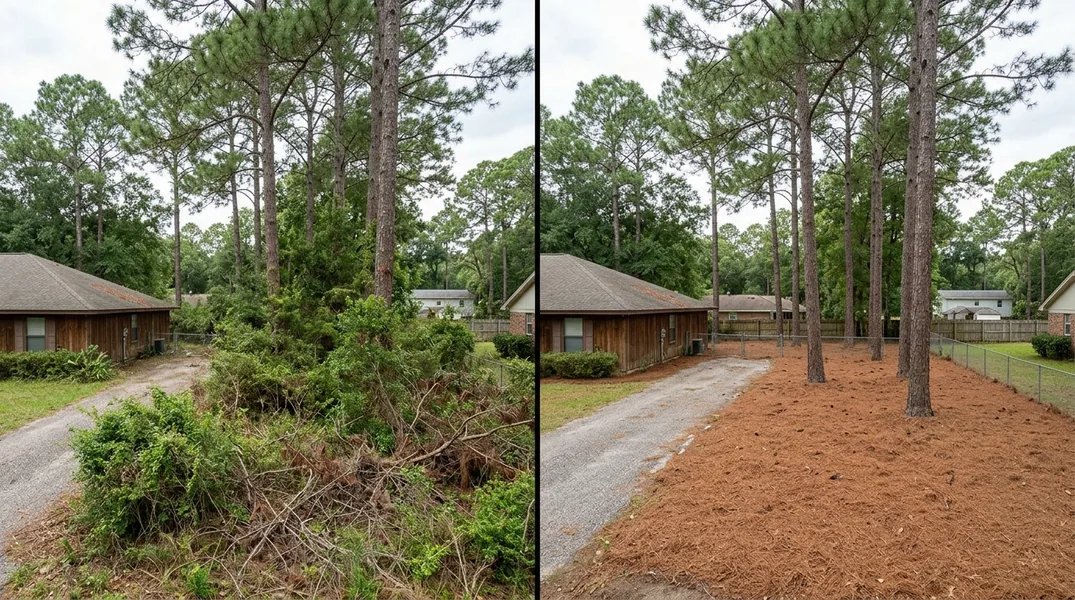
Understanding Laurel Oak and Water Oak Trees in Tallahassee
Laurel oaks and water oaks are native to Florida and have long been popular choices for landscaping throughout Tallahassee. These medium-sized oaks can grow 40 to 60 feet tall and offer decent shade, which makes them attractive to homeowners. However, both species have earned a reputation among arborists for being structurally weak and prone to failure, particularly as they mature.
The problem starts with how these trees grow. Unlike white oaks or live oaks, laurel and water oaks develop narrow branch angles and weak wood that doesn't hold up well under stress. This structural weakness becomes especially problematic during Florida's hurricane season or after heavy ice storms. Many homeowners in Tallahassee have experienced the sudden failure of these trees, often without warning. Understanding why these failures happen is the first step toward making an informed decision about whether your tree should stay or go.
Common Laurel Oak Tree Problems and Why They Fail
Laurel oak tree problems are well documented in Florida forestry circles, and homeowners should be aware of the most common issues. The primary problem is that laurel oaks develop what arborists call 'included bark' at branch junctions, meaning the bark grows between branches rather than creating a strong, unified attachment point. This structural flaw means that even a moderate storm can cause major limbs to split and fall, sometimes taking out power lines or damaging property below.
Beyond structural weakness, laurel oaks are susceptible to several diseases and pest infestations. Oak wilt, a fungal disease spread by beetles, can devastate these trees and spread to other oaks on your property. Additionally, laurel oaks attract wood-boring insects and are prone to canker diseases that create hollow sections within the trunk. Once a hollow oak tree develops, the wood loses structural integrity rapidly, and the risk of catastrophic failure increases significantly. If you notice signs of disease, declining foliage, or visible hollowing in your laurel oak, professional evaluation is critical.
Water Oak Removal: When It Becomes Necessary
Water oak removal is often recommended by experienced arborists because water oaks present similar structural problems to laurel oaks, sometimes even more severe. Water oaks grow quickly but produce brittle wood that doesn't age well. The combination of rapid growth and weak wood creates trees that look healthy on the surface but are structurally unstable underneath. In residential settings throughout Tallahassee, water oaks frequently lose major branches or topple entirely during storms.
The decision to remove a water oak should be based on a professional assessment of the tree's condition, its proximity to structures, and its overall health. If your water oak is leaning, has major deadwood, shows signs of disease, or is located near your home or driveway, removal is often the safest choice. Waiting for the tree to fail on its own can result in expensive property damage, injury risk, or both. Consulting with an arborist before problems develop allows you to plan removal at a time that works for your budget and schedule, rather than dealing with an emergency situation.
Hollow Oak Trees: Diagnosis and Removal Decisions
A hollow oak tree is a common sight in older residential yards, and many homeowners wonder whether a tree with significant internal decay can be saved. The reality is that while some hollow trees can remain standing for years, they are inherently unstable and unpredictable. Hollow oaks lose the structural support that solid wood provides, making them vulnerable to failure even in light winds. The larger the hollow section, the greater the risk. If you suspect your oak has significant internal decay, Tree Removal or professional evaluation is essential.
Some homeowners consider cavity treatments or bracing as alternatives to removal, but these methods have limited effectiveness on large hollow oaks. An experienced arborist can use tools like resistograph testing to assess the extent of internal decay and advise whether the tree is salvageable. In many cases, especially with laurel or water oaks that are already structurally weak, hollowing is a sign that removal is the prudent choice. The cost of removal is typically far less than the potential cost of storm damage or injury if the tree fails unexpectedly.
Oak Tree Removal in Tallahassee: What to Expect
When you decide that oak tree removal in Tallahassee is necessary, understanding the process helps you prepare. Professional removal involves careful planning to ensure the tree comes down safely without damaging your home, nearby structures, or utility lines. Arborists will assess the tree's lean, branch distribution, and nearby obstacles to determine the safest removal strategy. Depending on the tree's size and location, they may use ropes, cranes, or sectional cutting to bring the tree down piece by piece.
After the tree is removed, you'll likely want to address the remaining stump. Stump Grinding is the most popular solution, as it removes the entire stump and root system below ground, leaving your yard ready for replanting or other landscaping projects. Tallahassee Tree Service handles the complete removal and cleanup process, so you don't have to worry about coordinating multiple contractors. Call (850) 583-9671 to discuss your specific situation and get a detailed plan for safe removal.
Preventing Future Oak Problems: Maintenance and Replacement
While some oak problems can't be prevented, regular maintenance can extend the life of a tree and reduce the risk of sudden failure. Tree Trimming & Pruning removes dead branches, improves air circulation, and reduces the weight load on weak branch attachments. Professional pruning also allows arborists to identify early signs of disease or structural problems before they become critical. If you have a laurel or water oak on your property, annual or biennial inspections by an experienced arborist are a smart investment.
If you're removing a problematic laurel or water oak, consider replacing it with a more structurally sound species. Native Florida oaks like live oaks, white oaks, or southern red oaks are far more durable and long-lived. These species develop stronger wood, better branch structure, and greater resistance to disease. When replanting, choose a species suited to your soil conditions and available space. Tallahassee Tree Service can advise you on the best replacement options for your landscape. For a free estimate on removal and consultation about replacement trees, contact us today at (850) 583-9671.
Looking for a professional tree service contractor in Tallahassee? Tallahassee Tree Service responds fast for all your tree service needs.
Get a Free QuoteOur services: Tree Removal · Tree Trimming & Pruning · Stump Grinding